What Is Live Futures Day Trading and How Does It Work in Practice?
Want articles like this for your own video to promote it on YouTube and Google? Order them through the Telegram bot @sat_sit_bot. It writes articles around your video, embeds the video and publishes them on popular niche websites (no ads). Free trial — 50 articles.
· based on the channel Patrick Wieland
Key takeaways
- Live futures day trading means buying and selling contracts like ES, NQ, GC and CL inside a single session, usually with no overnight positions.
- Prop firms such as Topstep, Apex Trader Funding, TakeProfitTrader and Lucid Trading give traders funded accounts in exchange for passing an evaluation.
- Copy trading lets followers mirror a lead trader's futures entries and exits automatically through linked accounts.
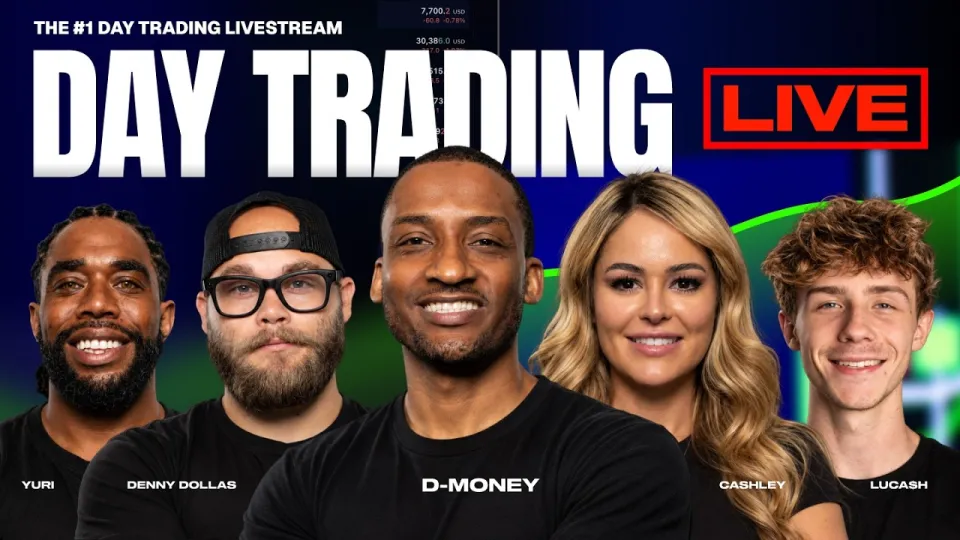
- The Patrick Wieland stream is a live trading-floor format: market analysis, real-time futures trades, prop firm reviews and giveaways.
- Risk management, not prediction, is what separates traders who keep funded accounts from those who blow them.
Live futures day trading is the practice of buying and selling futures contracts such as ES, NQ, GC or CL during an active session, with positions opened and closed inside the same day and no overnight exposure. It is not a single strategy but a format: real-time execution, tight risk control and a defined plan for every entry. That combination is exactly what a live trading-floor stream like the one hosted by Patrick Wieland puts on display.
What live futures day trading actually means
Day trading futures means you trade a standardized contract tied to an index, commodity or currency and you flat your position before the session ends. The most common instruments are the E-mini S&P 500 (ES), the E-mini Nasdaq 100 (NQ), gold (GC) and crude oil (CL).
Three features define the format:
- Intraday horizon. Trades last minutes to hours, not weeks. No overnight gap risk, no margin calls from a surprise open.
- Leverage with a leash. Futures margin is small relative to contract value, which magnifies both gains and losses. That is why position sizing matters more than the entry itself.
- Session rhythm. Volume concentrates around the US cash open and key economic releases, so most day traders work a narrow window rather than the whole clock.
A live stream is useful here because it shows the unedited version: hesitation, scratched trades and the moments when a setup is skipped rather than forced.
How prop firm trading fits into the picture
Prop firm trading is the model where a company gives a trader access to its capital after the trader passes an evaluation and agrees to a set of risk rules. In futures, the best-known names include Topstep, Apex Trader Funding, TakeProfitTrader, Lucid Trading, Tradeify, Legends Trading, BluSky Trading, TradeDay and MyFundedFutures.
The mechanics are broadly similar across providers:
- You pay a fee for an evaluation account with a profit target and a maximum drawdown limit.
- You trade according to the rules, typically a daily loss cap and a trailing or static drawdown.
- Once you pass, you receive a funded account and split profits with the firm, often around 80/20 to 90/10 in the trader's favor.
The appeal is obvious: a trader with a small personal account can control meaningful size without risking their own savings. The catch is equally obvious: the rules are strict, and a single oversized trade can end an evaluation. Rankings and reviews of these firms are a recurring topic on the BDH stream, which is why so many viewers arrive already comparing providers.
Copy trading and the social layer of futures
Copy trading is an arrangement where one trader's orders are mirrored into other accounts, either automatically through a platform link or manually by followers. In futures it is usually implemented through trade-copier software that connects a lead account to follower accounts.
What it changes:
- Execution speed. Automated copy trading enters and exits followers at nearly the same moment as the lead trader.
- Position sizing. Followers can scale the copied size up or down relative to their own account.
- Accountability. The lead trader's results become visible in real time, which cuts both ways.
What it does not change is risk. A follower who copies size that is too large for their account will still blow up, even if the underlying trade idea is sound. Copy trading transfers execution, not judgment.
The questions traders ask most about live setups
When a live futures show runs every trading day, the same practical questions come up repeatedly. Two themes dominate the chat: what exact setup is being traded, and where a viewer can get that same setup for their own account.
The honest answer has three parts:
- A setup is a rule set, not a secret. Entry trigger, stop placement, target and the conditions under which the trade is skipped.
- Context decides whether the rule set works. The same pattern behaves differently in a trending session versus a range-bound one.
- Education shortens the learning curve but does not remove it. Structured courses and live observation compress the time it takes to stop making basic errors.
Patrick Wieland's own material follows this logic: a paid two-hour course that teaches the strategy he trades live, alongside free daily streams where the same approach is applied in real conditions. For a beginner, the sequence that makes sense is to watch first, paper trade second and only then commit real capital or an evaluation fee.
Risk rules that keep a funded account alive
Risk management is the part of trading that decides whether a funded account survives its first month. The rules below are standard across futures prop firms and personal accounts alike.
- Daily loss limit. Decide the maximum you can lose in a session and stop when you hit it. Most blown evaluations die on this rule alone.
- Fixed risk per trade. Risking a small, constant percentage of the account keeps a losing streak survivable.
- One instrument at a time. Correlated positions in ES and NQ are effectively one bigger bet.
- No revenge trades. A losing trade is data; the next trade should follow the plan, not the emotion.
- Journal every session. Entries, exits, screenshots and the reason for each decision.
A live floor format is instructive precisely because it makes these rules visible in real time. Viewers see when a trader walks away, sizes down or refuses a setup that does not meet criteria — decisions that never appear in a highlight reel.
How to start watching and learning from live futures streams
Watching a live trading stream is most useful when you treat it as structured study rather than entertainment. A practical approach:
- Pick one instrument and one session to follow, so you are not jumping between markets.
- Write down the setup criteria before the stream starts, then check whether the trades on screen match them.
- Track how the trader manages risk, not just where they enter.
- Review your own paper trades against what you observed.
- Only after a consistent paper-trading record, consider an evaluation account with a firm whose rules you have read in full.
The BDH stream runs live from trading floors in South Florida and California, with a recurring crew alongside Patrick Wieland, and combines market analysis, prop firm rankings, giveaways and live futures execution. It is a working example of the format rather than a guarantee of results — the disclaimer on the channel is explicit that trading futures carries substantial risk and that past performance does not predict future outcomes.
The bottom line on live futures day trading
Live futures day trading is a skill built from repetition, strict risk control and honest review, not from a single indicator or a copied entry. Prop firm accounts have made the format accessible to traders without large personal capital, but they have also made discipline non-negotiable, because every rule violation has a measurable cost. Live streams such as the one produced by the Patrick Wieland channel are valuable as a window into real decision-making: sizing, skipping, stopping and journaling. Use them to study process, test everything on paper first, and treat any course or firm referral as a tool rather than a shortcut. The traders who last are the ones who treat risk as the strategy, not as an afterthought.
Source: LIVE DayTrading! #1 Watched Futures Trading Show! · Markdown version
Questions & answers
What is the difference between live day trading and swing trading futures?
Live day trading closes every position inside the same session, so there is no overnight exposure to gaps or news. Swing trading holds positions for days or weeks and accepts that overnight risk in exchange for capturing larger moves. Day trading usually requires more screen time and faster decisions, while swing trading demands more patience and wider stops.
Do I need a prop firm account to day trade futures?
No, you can trade futures through a regular broker with your own capital. Prop firms like Topstep or Apex Trader Funding simply let you trade the firm's capital after passing an evaluation, which lowers the personal capital required but adds strict drawdown and daily loss rules. The right choice depends on whether you can follow those rules consistently.
Is copy trading a safe way to follow a futures trader?
Copy trading automates execution but does not transfer risk management. If you copy size that is too large for your account, a normal losing streak can still wipe you out. Use position scaling, set your own maximum loss and never copy a trader whose full track record you have not reviewed.
Where can I learn the setup used on a live futures stream?
Most live traders sell a structured course that explains their entry, stop and target rules, and Patrick Wieland offers a two-hour course teaching the strategy he trades on stream. Watching the free daily broadcasts first is a sensible way to judge whether the approach fits your style before paying for any education.